The Human Touch: Benefits of Small Assisted Living Homes in Senior and Memory Care
Business Name: BeeHive Homes of Enchanted Hills
Address: 6336 Enchanted Hills Blvd NE, Rio Rancho, NM 87144
Phone: (505) 221-6400
BeeHive Homes of Enchanted Hills
BeeHive Homes of Enchanted Hills offers Assisted Living for your loved ones. 24x7 care in the comfort of a private room with bath. Meals are family style and cooked fresh each day. Stop by today and visit, and see why we always say "Welcome Home!
6336 Enchanted Hills Blvd NE, Rio Rancho, NM 87144
Business Hours
Families hardly ever start their search for assisted living and memory care with a clear map. More often, it starts with a fall, a roaming occurrence, a distressing phone call during the night, or a sluggish awareness that a parent is no longer safe living alone. Extremely rapidly, you find yourself weighing shiny sales brochures for large senior communities versus quiet, simple homes tucked into residential neighborhoods.
I have spent years inside both designs: handling care teams in large senior living schools and advising households who ultimately selected little residential assisted living homes. Both can be proper. Yet small homes, when well run, use a type of human touch that is tough to replicate in larger settings, specifically in memory care and respite care.
This short article looks carefully at the advantages of small assisted living homes, without glamorizing them. The objective is not to offer one answer, but to provide you a clear, practical understanding of what a smaller setting can use, what to watch for, and when it is the right suitable for your family.
What "small assisted living" actually means
The term "little assisted living home" typically refers to licensed residential care homes that serve a minimal variety of citizens, typically in between 4 and 16, in a single home or a small structure situated in a common neighborhood.
From the outside, they often look like any other home on the street. Inside, they offer assistance with activities of daily living, such as bathing, dressing, and medication management, along with meals, supervision, and varying levels of memory care.
Several functions tend to differentiate these homes from larger senior care communities:
- Resident census is low, which impacts staff-resident relationships, regimens, and social dynamics.
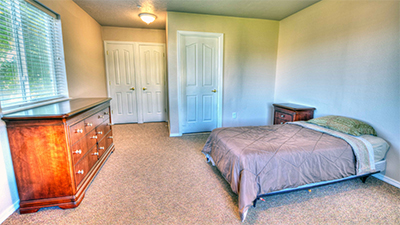
- Floor strategies look like a family home more than an institutional building.
- Staffing functions are typically blended: caregivers might prepare, tidy lightly, and offer individual care within the same shift.
- Leadership is close to the flooring. Owners or administrators are more noticeable and accessible.
None of this guarantees quality by itself. Regulations and requirements matter, and they vary by state or country. Nevertheless, the scale and intimacy of small assisted living homes produce structural benefits for numerous older adults, especially those dealing with dementia or intricate medical needs.
The emotional landscape: why scale matters in elderly care
Senior care is not just a clinical decision. It is an emotional environment that somebody will reside in 24 hours a day. The scale of a community shapes that environment in ways households frequently undervalue when they first tour.
In big communities, a new resident may satisfy dozens of personnel throughout the very first week: multiple caregivers, nurses, activity organizers, dietary assistants, receptionists, and so on. Names blur. Regimens feel choreographed around the needs of the structure rather than the person. With time, many residents adjust and prosper, but the change can be hard, specifically for those with amnesia who have problem with new faces and complicated layouts.
In a small assisted living home, the psychological landscape is different. A resident may frequently engage with the very same 4 to 8 team member. The living-room and kitchen area are actions far from the bedrooms, and the garden shows up from many windows. Even when cognition is impaired, the environment feels decipherable. Residents detect smells from the kitchen area, voices from the hallway, and the rhythm of a house instead of the hum of a facility.
For a person with dementia, this simplicity can lower anxiety, minimize agitation, and make engagement more natural. I have actually seen quiet, withdrawn senior citizens in a large memory care unit become talkative again in a small home once they recognized the caregivers and could forecast the flow of the day.
Continuity of relationships and the power of being "understood"
The phrase "person-centered care" appears in nearly every pamphlet for elderly care. The difference is not whether neighborhoods utilize the expression, but whether their structure allows it.
In a small home, caretakers usually assist the same locals each day. Over weeks and months, they build up a deep, practical understanding: how Mrs. Alvarez likes her tea, the song that soothes Mr. Young when he ends up being nervous, the exact method to position Mr. Rivera's pillow so his arthritic shoulder does not hurt at night. This type of understanding hardly ever makes it into a care strategy, yet it shapes quality of life.
I recall a gentleman with moderate Alzheimer's disease who grew distressed each evening in a large memory care wing. Personnel did their best, however shifts changed, and brand-new aides frequently tried to redirect him with standard strategies. Later on, he transferred to a six-bed assisted living home. Within two weeks, one caregiver had learned his former commute route and started taking short walks with him at the very same time he utilized to return home from work, telling the "drive" aloud. His evening agitation decreased considerably. Absolutely nothing in his medication list altered. What altered was the level of personal attention and continuity.
This is not a criticism of caretakers in larger settings, who frequently work simply as difficult under heavier assignments. It is an observation about ratios and structure. In a home with fewer locals, personnel can decrease enough to see patterns, individualize regimens, and carry that learning forward day after day.
Advantages for memory care in little homes
Memory care, whether in a devoted unit or embedded in an assisted living setting, is where the difference in scale frequently ends up being most obvious.
First, people dealing with dementia benefit from duplicated, predictable interactions. In little assisted living homes, the exact same caretaker frequently assists with early morning care, escorts to meals, and supplies night assistance. Repeating develops trust. When a resident sees a familiar face enter their room, they are more likely to accept aid with intimate jobs like bathing or toileting, which minimizes distress and the need for medicinal interventions.
Second, the physical environment of a little home can feel less complicated. Hallways are short. Doors are less. Spaces are multi-purpose but familiar: a kitchen table for meals and activities, a living room for visits and peaceful time. For lots of people with memory loss, this mirrors the structure they have understood for years. They do not have to work as difficult to translate their surroundings.
Third, behavioral symptoms frequently soften when sensory overload reduces. Bigger memory care units can be loud since of overhead paging, many residents in common areas, frequent visitors, and consistent activity. Some stimulation is healthy, but excessive can provoke agitation in people with dementia. Little homes tend to have a gentler sensory climate. Caregivers see habits changes in genuine time and can react rapidly, often before behaviors escalate.
However, not all little homes are immediately equipped for sophisticated memory care. Families must take note of several bottom lines: personnel training in dementia communication, methods for roaming and exit-seeking, fall avoidance, and how the home handles homeowners who end up being physically or verbally aggressive. Request for specific examples, not simply general assurances.
Respite care: a low-risk way to evaluate the fit
Respite care refers to short-term stays that provide household caretakers a short-lived break while providing safe, supportive senior care for their loved one. Stays can vary from a couple of days to a number of weeks, depending upon guidelines and neighborhood policies.
Small assisted living homes can be especially well fit for respite care in several scenarios. When a spouse or adult child is exhausted from caregiving, the idea of dropping a loved one into a large, dynamic community can feel frustrating. A calm, home-like setting might feel less like "placing" somebody and more like extending the circle of family care.
From a useful standpoint, respite remains in little homes allow personnel to truly be familiar with the person rapidly. Due to the fact that there are fewer residents, a newcomer's habits and character stand apart. I have seen respite admissions in little homes where, within two days, personnel were using the resident's own family stories as discussion starters, changing menu alternatives, and incorporating favorite activities like gardening into the routine. That depth of customization builds trust not only with the resident but with the household choosing whether longer-term assisted living or memory care might be essential in the future.
For families uncertain whether their loved one is ready for full-time residential care, a prepared respite stay can work as a trial. It offers everyone a possibility to see how the individual adapts, how the personnel communicate, and whether the home's culture feels lined up with the resident's personality.
Daily life: routines, versatility, and dignity
One of the more powerful benefits of small assisted living homes lies in everyday rhythms. Large neighborhoods frequently should work on tight schedules to move lots of locals through early morning care, meals, and activities. This is understandable, however it can cause a subtle erosion of autonomy. Breakfast may only be served during a narrow window. Bathing days are repaired. Group activities are planned for effectiveness rather than individual preference.
In a small home, there is more space for versatile regimens. If Ms. Patel is a lifelong night owl who chooses a 10 a.m. Breakfast and a late bath, it is easier for staff to accommodate her without interrupting dozens of others. If Mr. Lewis just consumes well when he can have toast and coffee initially, then eggs later on, that can be arranged. I have seen blended regimens where one resident consumes traditional breakfast foods, another prefers warmed leftovers from the previous night's supper, and a 3rd consumes fruit and yogurt, all prepared in the same kitchen area at the very same time.
Dignity in elderly care often hinges on small options like these. Having the ability to sleep when tired, eat when starving, and shower when it feels right might sound basic, however these are the everyday freedoms that make life seem like one's own. Little assisted living settings are structurally much better placed to preserve them.
Furthermore, personal privacy can be handled more sensitively. While some little homes use shared spaces, many provide personal bedrooms, and the distance in between bed room and communal area is brief. For individuals who tire quickly or feel overstimulated, this enables a simple retreat without isolation.
Family participation and communication
Families frequently inform me the most unpleasant part of transitioning a loved one to assisted living or memory care is the sensation of "handing them over" to strangers. In small homes, that boundary between household and staff can become more permeable, in a favorable way.
In a well handled residential home, personnel know not just the resident however likewise the names and faces of their kids, grandchildren, and buddies. Communication tends to be more direct. Instead of going through numerous layers of management, you can typically call and speak to the caregiver who helped your mother get dressed that early morning or the individual who sat next to your father during lunch.
This promotes a sense of collaboration. Families feel more comfy sharing insights: the best method to coax Dad into the shower, the music that assists Mom consume, the warning signs that an infection may be developing. Staff, in turn, are most likely to share small observations. I have actually had telephone call with family members where we discussed modifications in a resident's gait, slight distinctions in hunger, or subtle shifts in state of mind, days before those modifications would rise to the level of an official report in a larger system.
For long distance households, this immediacy can be essential. When you live in another state and can not visit frequently, you would like to know that the people taking care of your loved one see them as a private and will get the phone genuine discussions, not just send monthly newsletters.
Staffing: ratios, training, and what "good" looks like
One of the most touted benefits of small assisted living homes is better staff-to-resident ratios. On paper, the numbers typically look beneficial. For instance, a 10-bed home might staff two caretakers per shift, which translates to a 1:5 ratio, often better throughout peak hours. By contrast, caretakers in a larger assisted living or memory care system may be accountable for 10 to 16 locals each.
However, ratios alone do not guarantee quality. It is important to comprehend what caretakers are responsible for within those ratios. In many small homes, caregivers also prepare meals, do laundry, neat typical areas, and perhaps answer phones. This can still work well if the home is well arranged, however you require to ask how staff balance these jobs with direct care.
Training is equally critical. Some residential homes invest heavily in dementia-specific and senior care education, while others count on minimal state requirements. When evaluating a home, ask detailed concerns: Who trains brand-new staff? How do they deal with medical emergency situations? How do they respond to falls, confusion, or sundowning behaviors?
From experience, strong small homes share several staffing qualities:
- Low turnover among core caretakers, so homeowners see familiar faces.
- Clear on-call or backup plans when somebody hires ill, preventing hazardous ratios.
- Regular oversight by a nurse or experienced administrator, even if not on site 24/7.
- A culture where caregivers feel appreciated and heard, which equates into much better care for residents.
When you visit, observe how staff talk to locals. Do they kneel to eye level? Do they attend to homeowners by name? Do they pause to listen or hurry through tasks? Those subtle cues reveal far more than any marketing material.
Cost, worth, and covert trade-offs
Families often assume that small assisted living homes must be either considerably more affordable or more expensive than big communities. In truth, pricing varies widely by area, level of care, and amenities.
Monthly charges for small homes can vary from roughly comparable to mid-tier assisted living to greater than high end memory care units, depending on location and services. What matters is not just the heading cost, however what is included. Some homes offer genuinely all-encompassing rates that cover individual care, incontinence supplies, and transportation to medical appointments. Others charge lower base rates but add fees for each extra service.
Large communities often benefit from economies of scale in food service, activities, and transport. They may be able to offer more features: health clubs, medical spas, beauty parlor, numerous dining places, and a broad calendar of occasions. If your loved one is active and friendly, or if they value a resort-like environment, a bigger setting may provide much better value for their personality.
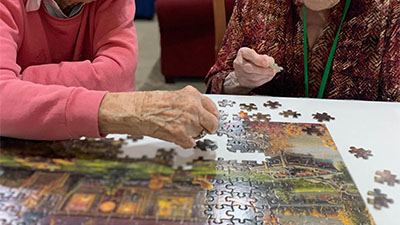
Small homes, on the other hand, typically invest their resources straight into hands-on care and the physical environment of a single house. They might have less formal activities however use richer casual engagement: assisting cook, folding laundry, tending the garden, taking part in little group conversations. For many people with cognitive decrease, these daily activities feel more meaningful than set up events.
Families need to weigh costs versus the specific needs of their loved one. A resident who is medically intricate, distressed in crowds, or easily disoriented may do better in a small, steady environment, even if amenities are modest.
When a little assisted living home might not be ideal
Despite their advantages, little homes are not best for each scenario. It is very important to recognize scenarios where a larger senior care community might be more appropriate.
Residents who long for a wide array of social interactions, clubs, and structured activities might feel limited in a home with only a handful of peers. Some small homes work around this by organizing regular trips or partnering with nearby day programs, but others do not. If your loved one flourishes on hectic calendars and big groups, ask in information about the activity program.

Highly specialized medical needs might likewise evaluate the abilities of a small setting. While lots of residential homes manage feeding tubes, insulin injections, and oxygen, others do not. Big neighborhoods in some cases have more direct access to respite care on-site nursing, going to medical providers, or rehabilitation services. In some jurisdictions, policies restrict what little homes can legally handle. Families should review these borders carefully, especially for sophisticated dementia, complicated mobility requirements, or progressive neurological conditions.
Finally, not all small homes are well controlled or well managed. Some operate with minimal oversight, cutting corners on staffing, training, or security. When a big community declines to admit someone because of complex behaviors or unsteady medical conditions, but a small home easily accepts them without clear support group, that can be a warning rather than an indication of superior care.
How to examine a little assisted living or memory care home
Because small homes vary, families need a structured approach to evaluation. A short, focused checklist can help:
- Visit at least two times, at various times of day, to observe early morning and evening routines.
- Ask particular concerns about staff ratios, training, and how they deal with typical circumstances like falls, roaming, and infections.
- Notice smells, sounds, and the general mood. Does the home feel calm, purposeful, and respectful, or disorderly and tense?
- Talk to present households if possible. Ask what communication is like and how the home reacts when something goes wrong.
- Review the contract carefully, consisting of discharge criteria and how the home deals with hospitalizations or decreases in condition.
These actions take time, however they offer you a clearer image of the culture and reliability of the home you are considering.
The quiet strength of regular life
The most powerful moments I have experienced in little assisted living homes are rarely remarkable. They look like common life.
A caregiver sitting beside a resident with innovative dementia, quietly shelling peas and humming a half-remembered hymn. A former engineer discussing the mechanics of the toaster oven to an employee who has actually heard the very same explanation lot of times but listens as though it is new. An afternoon spent seeing birds at the feeder, where staff relocation at the rate of the residents instead of hustling them from one activity to the next.
Senior care and memory care are intricate, and no setting removes all sadness or difficulty. Families still face decline, loss, and hard choices. Yet the structure of a small home supports a version of elderly care where human connection stays central: fewer complete strangers, more familiarity, less institutional routine, and more space for the individual behind the diagnosis.
For numerous older grownups, especially those with memory loss or those who feel overwhelmed by big environments, that human touch is not a luxury. It is the difference between merely being housed and truly being cared for.
If you are at the crossroads of this choice, provide yourself consent to look beyond square video footage, chandeliers, and marketing language. Sit at the kitchen table of a small assisted living home. Listen to the conversations wandering from the living room. Picture your loved one in that chair, at that table, because garden. Senior care is, above all, about how an individual lives each ordinary day. Little homes, when attentively chosen, often offer those days more calm, more self-respect, and more of the human touch that every person deserves.
BeeHive Homes of Enchanted Hills provides assisted living care
BeeHive Homes of Enchanted Hills provides memory care services
BeeHive Homes of Enchanted Hills provides respite care services
BeeHive Homes of Enchanted Hills supports assistance with bathing and grooming
BeeHive Homes of Enchanted Hills offers private bedrooms with private bathrooms
BeeHive Homes of Enchanted Hills provides medication monitoring and documentation
BeeHive Homes of Enchanted Hills serves dietitian-approved meals
BeeHive Homes of Enchanted Hills provides housekeeping services
BeeHive Homes of Enchanted Hills provides laundry services
BeeHive Homes of Enchanted Hills offers community dining and social engagement activities
BeeHive Homes of Enchanted Hills features life enrichment activities
BeeHive Homes of Enchanted Hills supports personal care assistance during meals and daily routines
BeeHive Homes of Enchanted Hills promotes frequent physical and mental exercise opportunities
BeeHive Homes of Enchanted Hills provides a home-like residential environment
BeeHive Homes of Enchanted Hills creates customized care plans as residents’ needs change
BeeHive Homes of Enchanted Hills assesses individual resident care needs
BeeHive Homes of Enchanted Hills accepts private pay and long-term care insurance
BeeHive Homes of Enchanted Hills assists qualified veterans with Aid and Attendance benefits
BeeHive Homes of Enchanted Hills encourages meaningful resident-to-staff relationships
BeeHive Homes of Enchanted Hills delivers compassionate, attentive senior care focused on dignity and comfort
BeeHive Homes of Enchanted Hills has a phone number of (505) 221-6400
BeeHive Homes of Enchanted Hills has an address of 6336 Enchanted Hills Blvd NE, Rio Rancho, NM 87144
BeeHive Homes of Enchanted Hills has a website https://beehivehomes.com/locations/enchanted-hills/
BeeHive Homes of Enchanted Hills has Google Maps listing https://maps.app.goo.gl/5LqAWwumxTEeaW5p7
BeeHive Homes of Enchanted Hills has Instagram page https://www.instagram.com/beehivehomesriorancho/
BeeHive Homes of Enchanted Hills has an YouTube page https://www.youtube.com/@WelcomeHomeBeeHiveHomes
BeeHive Homes of Enchanted Hills won Top Assisted Living Homes 2025
BeeHive Homes of Enchanted Hills earned Best Customer Service Award 2024
BeeHive Homes of Enchanted Hills placed 1st for Senior Living Communities 2025
People Also Ask about BeeHive Homes of Enchanted Hills
What is BeeHive Homes of Enchanted Hills Living monthly room rate?
The rate depends on the level of care that is needed. We do a pre-admission evaluation for each resident to determine the level of care needed. The monthly rate is based on this evaluation. There are no hidden costs or fees
Can residents stay in BeeHive Homes until the end of their life?
Usually yes. There are exceptions, such as when there are safety issues with the resident, or they need 24 hour skilled nursing services
Do we have a nurse on staff?
No, but each BeeHive Home has a consulting Nurse available 24 – 7. if nursing services are needed, a doctor can order home health to come into the home
What are BeeHive Homes’ visiting hours?
Visiting hours are adjusted to accommodate the families and the resident’s needs… just not too early or too late
Do we have couple’s rooms available?
Yes, each home has rooms designed to accommodate couples. Please ask about the availability of these rooms
Where is BeeHive Homes of Enchanted Hills located?
BeeHive Homes of Enchanted Hills is conveniently located at 6336 Enchanted Hills Blvd NE, Rio Rancho, NM 87144. You can easily find directions on Google Maps or call at (505) 221-6400 Monday through Sunday 9:00am to 5:00pm
How can I contact BeeHive Homes of Enchanted Hills?
You can contact BeeHive Homes of Enchanted Hills by phone at: (505) 221-6400, visit their website at https://beehivehomes.com/locations/enchanted-hills/ or connect on social media via Instagram TikTok or YouTube
Visiting the Vista Grande Park provides a neighborhood setting ideal for assisted living and elderly care residents enjoying calm respite care outings.